
logo e

Basic Selling Skills Microlessons

Basic Sales Reminders for Customer Service Employees

Basic Selling Skills Microlessons

Basic Selling Skills Microlessons features 18 basic sales concepts which are valuable to anyone in a customer-facing position. Topics are divided up into easy-to-use, minute-long chapters. It’s Basic Sales 101 intended for non-sales people. Content includes Features vs Benefits, Echo Questions, Knowing Your Objective, Proper Use of Tie-downs and much more.

Basic Selling Skills Microlessons

Here’s what your team will learn:

1

Features vs Benefits

Understanding the difference between a feature and a benefit is a crucial step in the sales process.

2

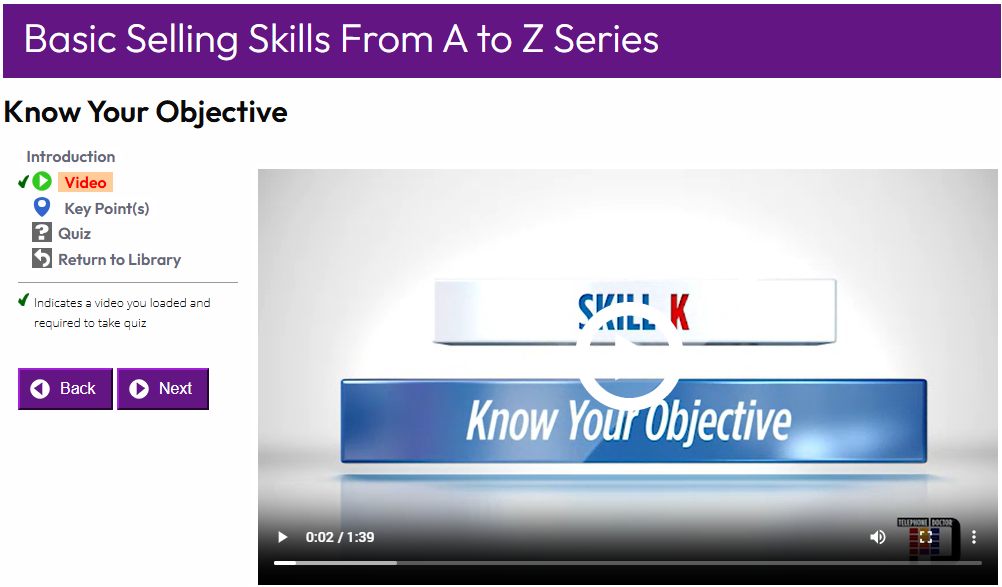
Know Your Objective

Your objective is defined as “what you plan to achieve if this interaction is successful.”

3

Four Killer Words

This avoidable phrase is so common it’s almost become social noise.

4

Don't Confirm a Negative

Confirming negative statements can have a detrimental impact on the sales process.

5

Echo Questions

Echo questions are a powerful technique to help you gather more information from your client or prospect.

6

Avoid One Word Answers

Explains the importance of always answering a customer’s question in a positive and upbeat manner.

7

Project Positivity

It’s important to always answer a customer’s questions in an upbeat and positive manner to preserve their trust in your organization.

8

Avoid Weak Wimpy Words

There are a number of common words and phrases that undermine the effectiveness of your conviction and confidence during the sales process.

9

Qualifying Needs

Tactful and effective techniques can help you learn who else is included in the buying process.

10

Smile

Whether it’s in person, on the phone, or on a video call, a smile signals friendliness to the prospect.

11

Tie Downs

Tie downs are short questions used at the end of a statement to ask for agreement from the prospect.

12

Understanding Needs

The selling process is nearly impossible if you don’t clearly understand a prospect’s needs.

13

Vary Your Responses

While it’s common to use the same response over and over again without realizing it, this can be annoying for the customer and is best avoided.

14

Eliminate Credibility Busters

There are several commonly used phrases that can hurt you and your organization’s trustworthiness.

15

Closing Questions

Closing questions are a key part of the sales process and involve simply asking the customer to move forward.

16

You Buy or They Buy

Did you accept the prospect’s excuse or did they place an order? Either way, someone is going to close the sale.

17

Negotiation

A giving and getting concession can help you move the deal across the finish line.

18

Alternate Choice

When making a closing statement, it can be best to avoid yes or no questions and instead provide two ‘yes’ options.