





Holiday staffing plans look great on paper. Then it’s the busiest Saturday of the year, and your newest seasonal hire, three shifts in, is helping a customer who suddenly says, “I want to talk to a manager.” The rest of your team has their hands full. Does your new hire know what to say?
Getting ready for the holiday rush takes more than extra people on the schedule. Hiring enough staff is one thing. Making sure every one of them, new or experienced, knows how to calm down a stressed customer is another.
Retail gets most of the attention this time of year, but any business with a predictable busy season goes through the same thing. Restaurants, home services, benefits teams during open enrollment, clinics, and contact centers handling year-end calls all see more customers, longer waits, and shorter tempers.
If your busy season is a few weeks away, there’s still time to prepare. Below, we’ll cover why now is the right time to train, where the pressure shows up, how to get new hires ready quickly, and what your team can say to the complaints that come up every year.
Why Holiday Staffing Prep Starts Four to Six Weeks Out
The rush is big. The National Retail Federation forecasts that November and December retail sales will grow 4.2% to $1.013 trillion in 2026, and it expects retailers alone to hire 325,000 to 375,000 seasonal workers. And that’s just retail.
More customers also means more chances to get it wrong. Qualtrics XM Institute’s global consumer research found that 11% of customer experiences are bad, and customers cut their spending after 47% of those bad experiences. In other words, one rough interaction can cost you more than that one sale.
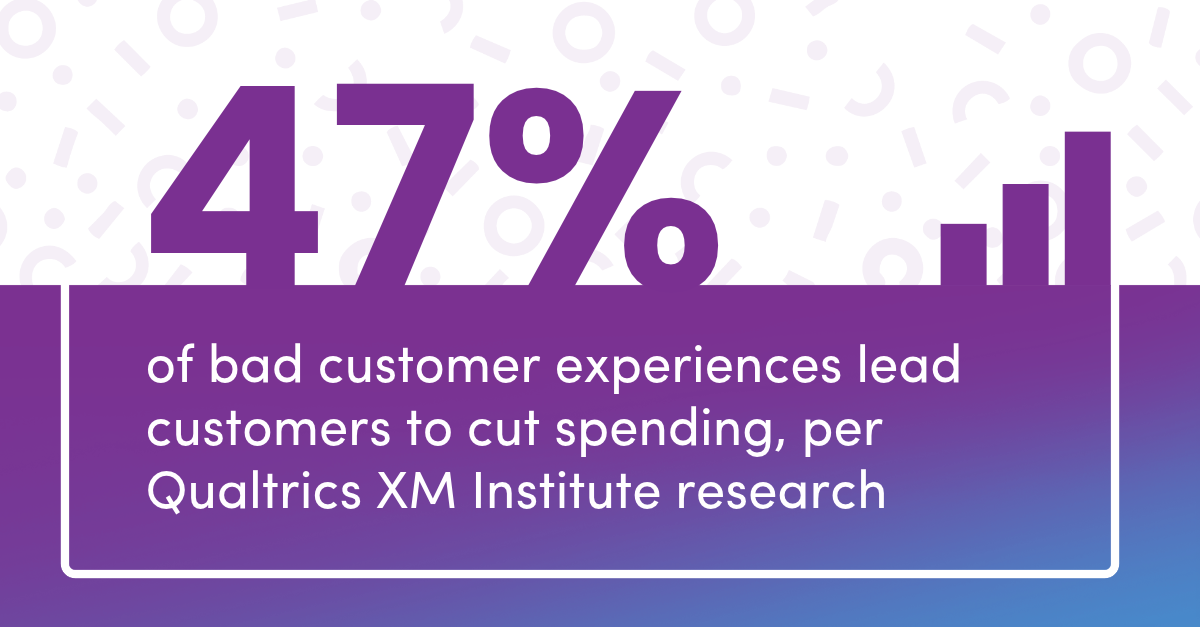
47% of bad customer experiences lead customers to cut spending per Qualtrics XM Institute research
That’s why the four to six weeks before your peak are the best training window you’ll get all year. Once the rush starts, nobody has time to coach. Before it, you have a little breathing room on the schedule and a team that knows what’s coming. Training done now gets practiced and sticks. Training saved for “when things calm down” happens in January, after the customers who needed it are gone.
There’s a long-term payoff, too. In its September 2026 hiring announcement, craft retailer Michaels said nearly 50% of its seasonal in-store positions converted to regular roles after last year’s holidays. Your seasonal hires could be next year’s team leads, so train them that way.
Where Peak Season Puts the Pressure on Seasonal Staffing
A rush doesn’t invent new problems. It just turns up the volume on the ones you already have. Before you plan training, look at the moments that tend to break down when volume spikes:
- Long lines and hold times. Customers arrive already frustrated, and a rushed greeting confirms their worst guess.
- Returns, exchanges, and billing questions. These need policy knowledge your new hires don’t have yet.
- Stressed customers. Deadlines, money worries, and travel plans shorten everyone’s fuse.
- Stressed employees. Tired reps can sound curt even when they don’t mean to.
Ask your veterans which of these hurt most last year. Their answer is your training priority list.
Seasonal Employee Training That Works When You Only Have a Week
You won’t turn a temporary hire into a ten-year veteran in a week, and you don’t need to. Focus seasonal employee training on the handful of behaviors customers notice most.
1. Teach the Greeting Before the Policies
Policies take weeks to learn. A warm greeting takes ten minutes. Start new hires with the first 30 seconds of every interaction, since that’s when customers form their first impression. Our post on phone etiquette tips explains why that window matters so much.
- “Thanks for waiting. I’m glad you called. Let’s get this sorted out.”
- “May I place you on a brief hold while I check? I’ll be back in about two minutes.”
2. Give Everyone One Escalation Path
Temporary staff training breaks down when new people have to guess. Give every seasonal hire one simple answer for anything they don’t know: who to ask, and what to say to the customer while they ask.
- “That’s a great question, and I want to get it right. Let me check with my lead and I’ll be right back.”
3. Pair Every New Hire With a Veteran
Shadowing beats a binder. Have new hires watch or listen to a veteran for two or three shifts, then flip it so the veteran observes them. Keep feedback to one thing per shift so it actually sticks. If a new hire rushes the hold, that’s the one note for today.
4. Practice Honest Timelines
Many peak-season complaints start with a promise nobody could keep. If a customer asks, “Will this be done by Friday?” a better answer than “Should be!” is “Our current estimate is Monday. If that changes, I’ll call you.” Our article on managing customer expectations goes deeper on this habit.
5. Refresh Your Existing Staff, Too
Your experienced people will carry the hardest calls and coach newcomers in between. Give them a short refresher on de-escalation and on whatever changes each season, like return windows or year-end deadlines. Then say it plainly: “Helping our new folks this month is part of the job, not a distraction from it.”
Scripts for the Complaints That Spike Every Peak Season
Even a well-trained team will face upset customers. Give your people the words before they need them, and role-play these in pre-shift huddles.
- “I’ve been waiting forever.” Try: “You’re right, that was a long wait, and I’m sorry. Let’s make the rest of this quick.”
- “Someone else told me something different.” Try: “I understand why that’s frustrating. Let me confirm the right answer so you get one clear answer from here on.”
- “I need this before the holiday.” Try: “Let’s look at what’s realistic. Here are the two fastest options I can offer.”
- “I want to speak to a manager.” Try: “Of course. Before I bring my supervisor over, can you give me a quick summary so you won’t have to repeat yourself?”
You’ll notice none of these blame the crowds, the system, or “corporate.” That’s on purpose. Pointing fingers just pours fuel on the fire. For calls that keep heating up, our de-escalation scripts for angry customers give your team more phrases to borrow.
FAQ: How Do Businesses Train Staff for a Seasonal Rush?
Start early, keep it short, and don’t stop once the rush hits. In practice, that looks like this:
- Start four to six weeks before your peak, while there’s still time to practice.
- Train new hires on greetings, holds, escalation, and honest timelines before deeper policy.
- Pair each new hire with an experienced employee for their first few shifts.
- Give everyone the same scripts for the complaints you know are coming.
- Run five-minute refreshers in daily huddles once the rush begins.
Short practice, repeated often, beats one long orientation every time.
A Course Built for Short Training Windows
When you have days instead of weeks, long-form training is a hard sell. That’s where the Customer Service & Phone Skills Microlessons fit. They break core customer service and phone skills into short lessons, so you can assign them to a seasonal hire on day one and use them as quick pre-shift refreshers for your veterans. Because everyone sees the same material, your customers get the same standard of service from a first-week temp and a ten-year pro.
Make This Your Best Holiday Staffing Season Yet
Great holiday staffing isn’t really about headcount. It’s about a team that knows what to do when the line backs up. So train early, focus new hires on the moments customers notice, give everyone scripts for the predictable complaints, and keep practicing once things get busy. Your team can handle the rush. They just need the reps before it arrives.
Want to see how it works? Book a 15-minute tour or explore the course library to find the right fit for your team.